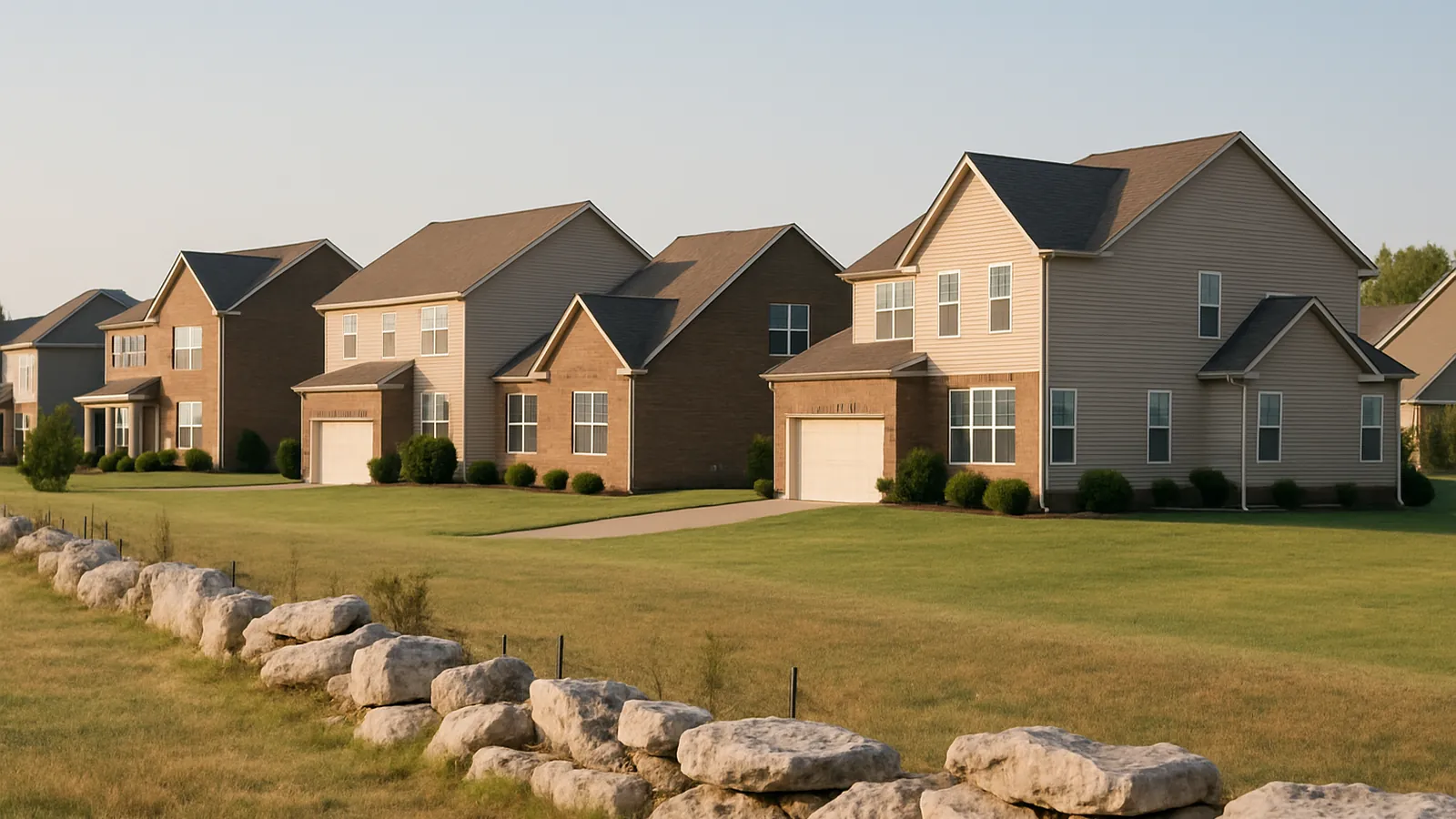
Slab foundation repair in Murfreesboro runs $3,500–$12,000 depending on how much of the slab lost support and whether interior piers are needed alongside perimeter work. In Rutherford County the usual driver is a combination: engineered fill settling while native clay cycles beneath it.
Slab homes fail differently than crawl-space homes. Here's how to read yours.
Two clocks running under one slab
A slab-on-grade foundation is a single concrete plane bearing directly on the ground, with no crawl space to inspect. In this county that ground frequently has two layers with two different schedules. Engineered fill, placed when the lot was graded, consolidates hardest during its first decade and tapers afterward. Native residual clay beneath it swells and shrinks with the seasons indefinitely, regardless of the fill's age.
Uniform movement rarely damages anything. What damages a slab is differential movement — one edge dropping while another holds, or the perimeter staying put while the middle dishes. That's what racks door frames, cracks tile along a line, and pulls trim away from walls. By the time it's visible upstairs, a laser survey usually shows an inch or more of difference across the plan.
Perimeter, interior, or both
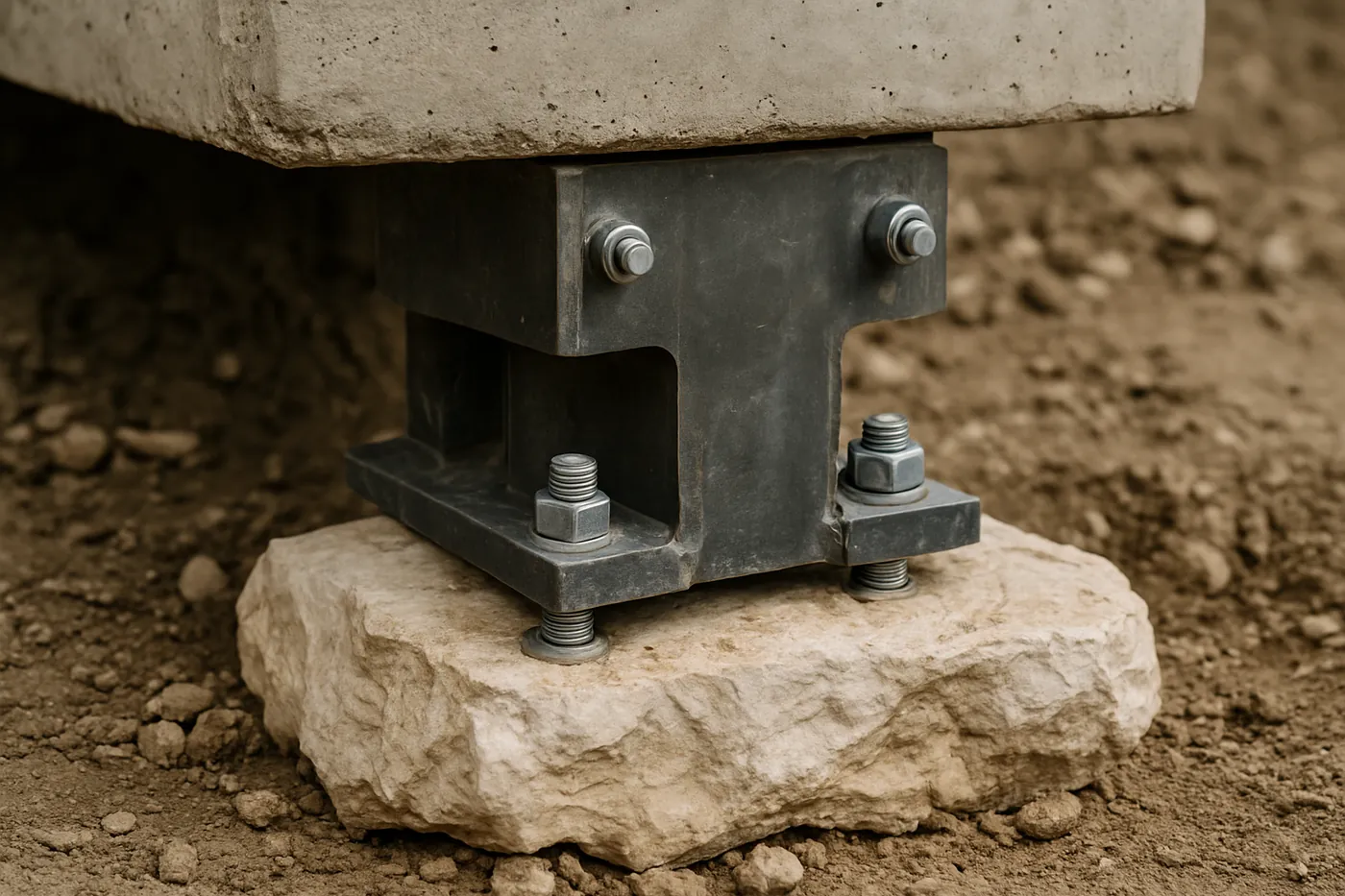
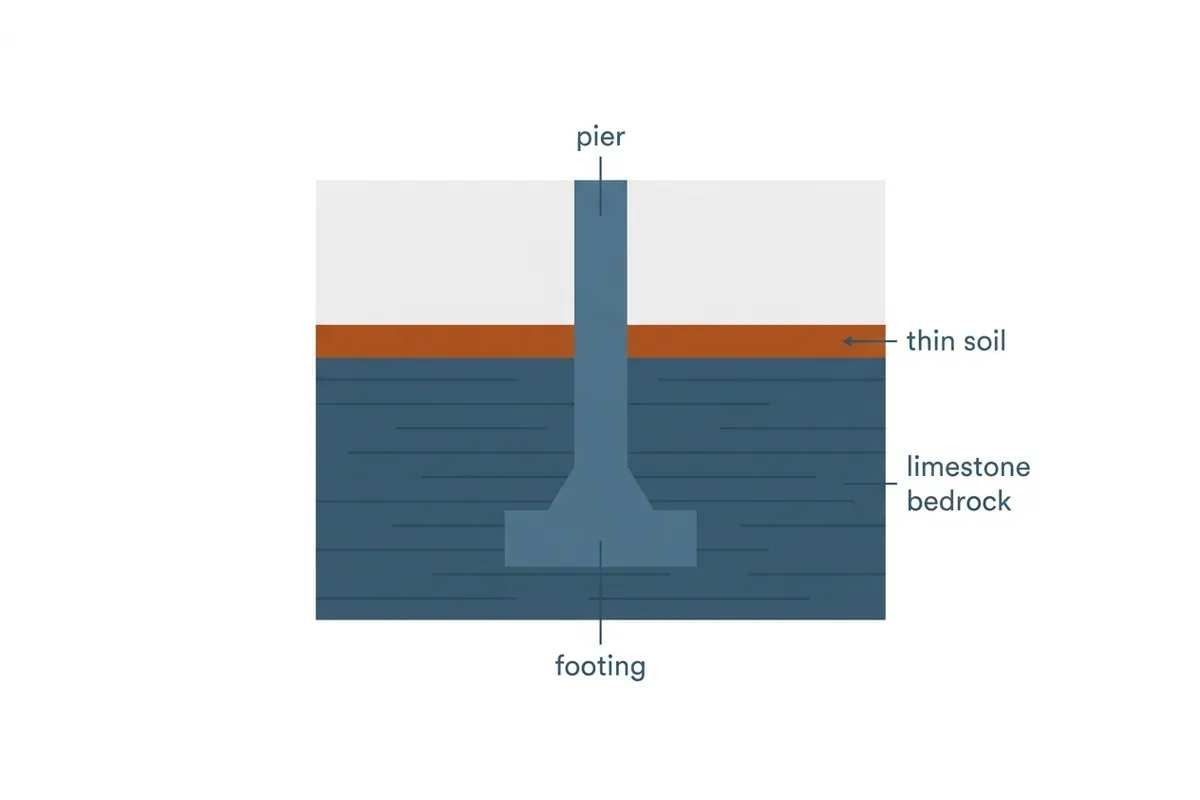
Where the survey shows the outside edge dropped, perimeter piers carry the slab's bearing walls to refusal on rock. Where the low point sits in the middle of the floor plan, interior support is needed — slab piers through small openings, or polyurethane injection lifting the slab onto a stable base. Many Rutherford County homes need some of each, and the elevations decide the proportion rather than a package price.
Age is a weak predictor here
The most common thing we hear in newer subdivisions is that the house is too young to have a foundation problem. On ground with both fill and cycling clay, build date predicts very little. What predicts movement is soil depth to rock, whether the lot was cut or filled, how the property drains, and the slab's size. A free laser survey settles the question in about an hour — and frequently ends the worry outright.
What can actually be done about a moving slab?
The signs cluster: a door that stopped latching this season, a hairline running diagonally from a corner, a floor that feels out of level near one wall, tile grout cracking in a line. On a slab those are all the same message, and there are only a few honest responses.
| Approach | What it does | Best suited to |
|---|---|---|
| Slab piers | Transfers load to firm strata beneath the slab | Settlement that is ongoing rather than finished |
| Interior void fill | Fills the gap left when soil pulls away underneath | A slab that is supported at the edges but unsupported in the middle |
| Moisture stabilisation | Evens out what the soil does seasonally | Movement that tracks the wet and dry seasons rather than worsening every year |
| Partial replacement | Removes and repours the failed section | Concrete already broken through, where support alone cannot restore a flat plane |
Most full repairs run $4,000–$15,000. The single most useful thing a homeowner can do before any quote is date the movement — whether it started this season or has crept for years changes which of these is right.
Slab questions, straight answers
Is slab movement common in Rutherford County subdivisions?
Common enough that it's most of what we see in the newer belt. Rapid growth put thousands of slab homes on graded lots, and the combination of engineered fill settling plus native clay cycling produces movement that shows up as racked doors and diagonal drywall cracks — often between years eight and fifteen.
How do you tell fill settlement from clay movement?
Trajectory. Fill settlement trends one direction and slows year over year. Clay movement breathes with the seasons — wider in a dry August, narrower after a wet winter. A dated pencil mark checked across one full cycle separates them for free, and the plat tells us whether fill is even in play.
Can you repair a slab without tearing up my floors?
Perimeter work happens entirely outside. Interior support does require small openings through the slab, patched at completion — that part is disruptive for a day or two in specific rooms. The scope names exactly how many interior locations are planned before anything starts, so you can plan around it.
My builder is still around. Should I call them first?
If the home is inside its structural warranty window, absolutely — a documented foundation problem may be a covered claim. Warranty administrators want measurements and a stated cause rather than photos of a crack, which is exactly what our evaluation report provides. We'll tell you when that's the better first call.
Get a free Murfreesboro foundation evaluation
Tell us what the house is doing — stair-step cracks, doors that stick every August, sloping floors, separating trim — and we’ll schedule an evaluation with photos and measurements. We reply the same business day.