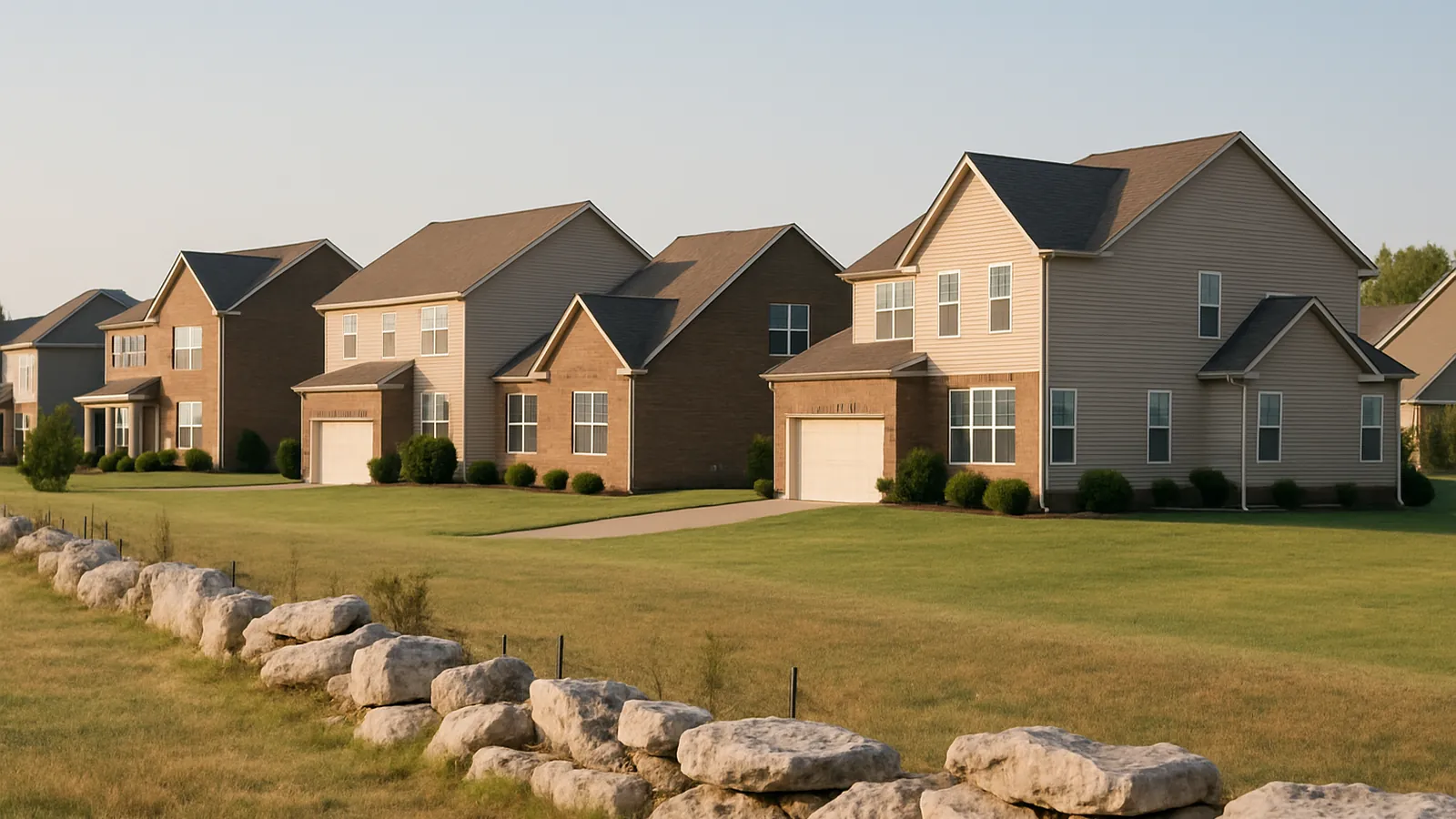
Foundation piering in Murfreesboro runs $1,200–$3,000 per pier, with most settlement repairs needing three to eight — $4,000–$15,000 for the job. Piers are driven through residual clay to refusal on limestone, and each pier's refusal pressure is logged individually.
Here's why depth varies so much across one Rutherford County lot.
Settlement over an uneven rock surface
In deep-clay markets, settlement is a story about soil volume. Here it's a story about bearing depth. Central Basin residual clay formed in place as the limestone beneath it weathered, and that weathering was never uniform — groundwater dissolved channels and pockets into the rock over geological time. The result is a limestone surface with real relief under a blanket of clay that looks perfectly ordinary from the yard.
Where the clay blanket is thin, a footing effectively rests on rock and barely moves. Where a deeper pocket sits beneath the same house, that footing bears on several feet of clay that swells and shrinks with the seasons. The two corners move by different amounts, year after year, and the structure spanning them takes the difference — usually as stair-step cracking and a floor that reads out of level along one line.
How a pier resolves it
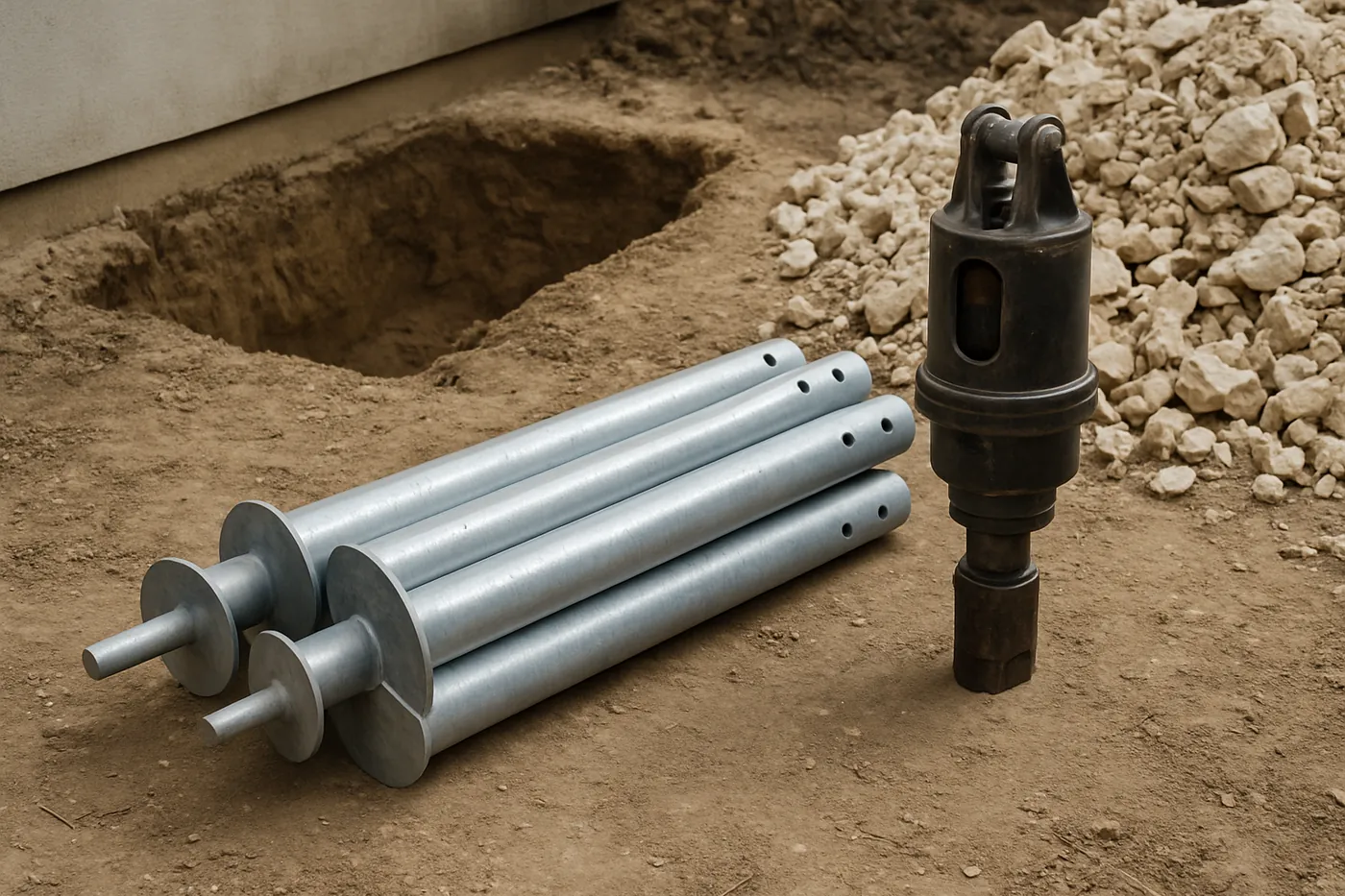
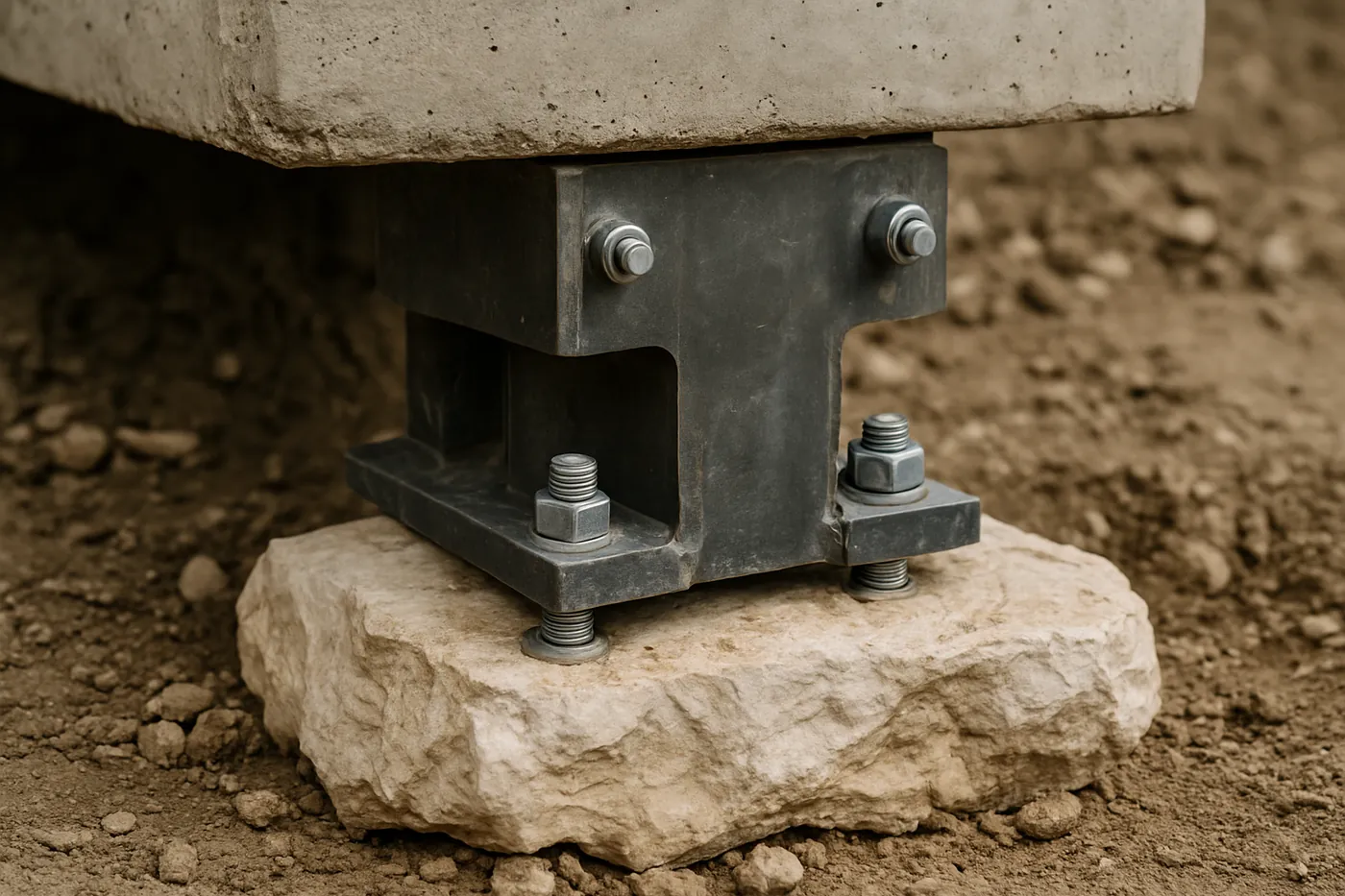
A steel pier is driven hydraulically beneath the footing, section by section, until it reaches material that stops it. On this geology that's normally the limestone itself, which makes for decisive, clean refusal — and unusually reliable long-term support. A bracket transfers the house's load onto that column, and the footing stops depending on the clay above.
Because the rock surface is irregular, pier depth is expected to differ across a single job, sometimes substantially between neighboring locations. That's normal here and it's why we log per-pier refusal pressure rather than quoting a standard depth. A crew installing every pier to identical depth on Central Basin ground isn't measuring anything.
What sets the count and the price
- The affected run — defined by the floor-level survey, not by house size
- Depth to rock at each location — the largest legitimate source of variation between honest bids
- Foundation type — slab perimeter, crawl-space footing, and porch or chimney footings carry different bracket work
- Access — tight side yards, mature landscaping, and hardscape add labor hours
Timeline
Most jobs run two days to a week, and the house stays livable throughout. Lift, where attempted, is synchronized and monitored against interior crack widths in real time. You receive the pier log, stage photographs, and warranty paperwork at completion.
How deep does a pier go when bedrock is shallow?
Central Basin residual clay sits over Ordovician limestone, often with little soil between. That single fact changes the arithmetic of piering here compared with the deep clay basins where these systems were developed, and it is why quotes from out-of-region crews sometimes read strangely.
| System | How it reaches capacity | Fit over shallow limestone |
|---|---|---|
| Push piers | Driven to refusal using the structure's own weight | Drives are often short here; refusal can come fast on competent rock |
| Helical piers | Screwed until verified torque is reached | Suits lighter structures, porches and additions that cannot supply push resistance |
| Drilled or poured piers | Cast against firm strata | Used where karst has left voids and a driven tip could seat over a cavity |
Piers commonly run $1,200–$3,000 each here, with most full repairs landing between $4,000 and $15,000. Shallow refusal is normally good news — but where limestone has dissolved, confirming what the tip is bearing on matters more than the depth reading.
Piering questions, straight answers
How many piers will my house need?
Most settlement repairs here use three to eight piers, set where the floor-level survey shows the footing actually dropped rather than spaced evenly around the house. In Rutherford County the count often clusters along one elevation of the home — the side where soil depth to rock is greatest.
How deep do piers go in Murfreesboro?
It varies more here than in deep-clay markets, and that's the point. Where limestone sits within a few feet, piers reach stable bearing quickly and cost less. Where the rock surface drops into a deeper pocket, the same house may need substantially longer piers a few yards away. Each pier is driven to its own refusal and the pressure is logged.
What does 'refusal' actually mean on rock?
It means the hydraulic ram can no longer advance the pier — the column has met material that carries load without further movement. On Central Basin limestone that's usually decisive and clean. The refusal pressure recorded for each pier is your evidence that the column found rock rather than stopping in a dense clay layer.
Will piering lift the house back to level?
Often partially. Stabilization is the promise; recovery is the bonus, attempted where the structure can safely take it and monitored against interior crack widths as it happens. On houses that have moved for many seasons, some of that movement is permanent — we say so before starting rather than after.
Does the work damage my yard?
Exterior piers need an excavation pit at each location, backfilled and compacted at completion. Landscaping directly above a pier gets disturbed; the rest of the yard doesn't. Access routes and pit locations are named in the scope before the crew arrives, so nothing about day one is a surprise.
Get a free Murfreesboro foundation evaluation
Tell us what the house is doing — stair-step cracks, doors that stick every August, sloping floors, separating trim — and we’ll schedule an evaluation with photos and measurements. We reply the same business day.