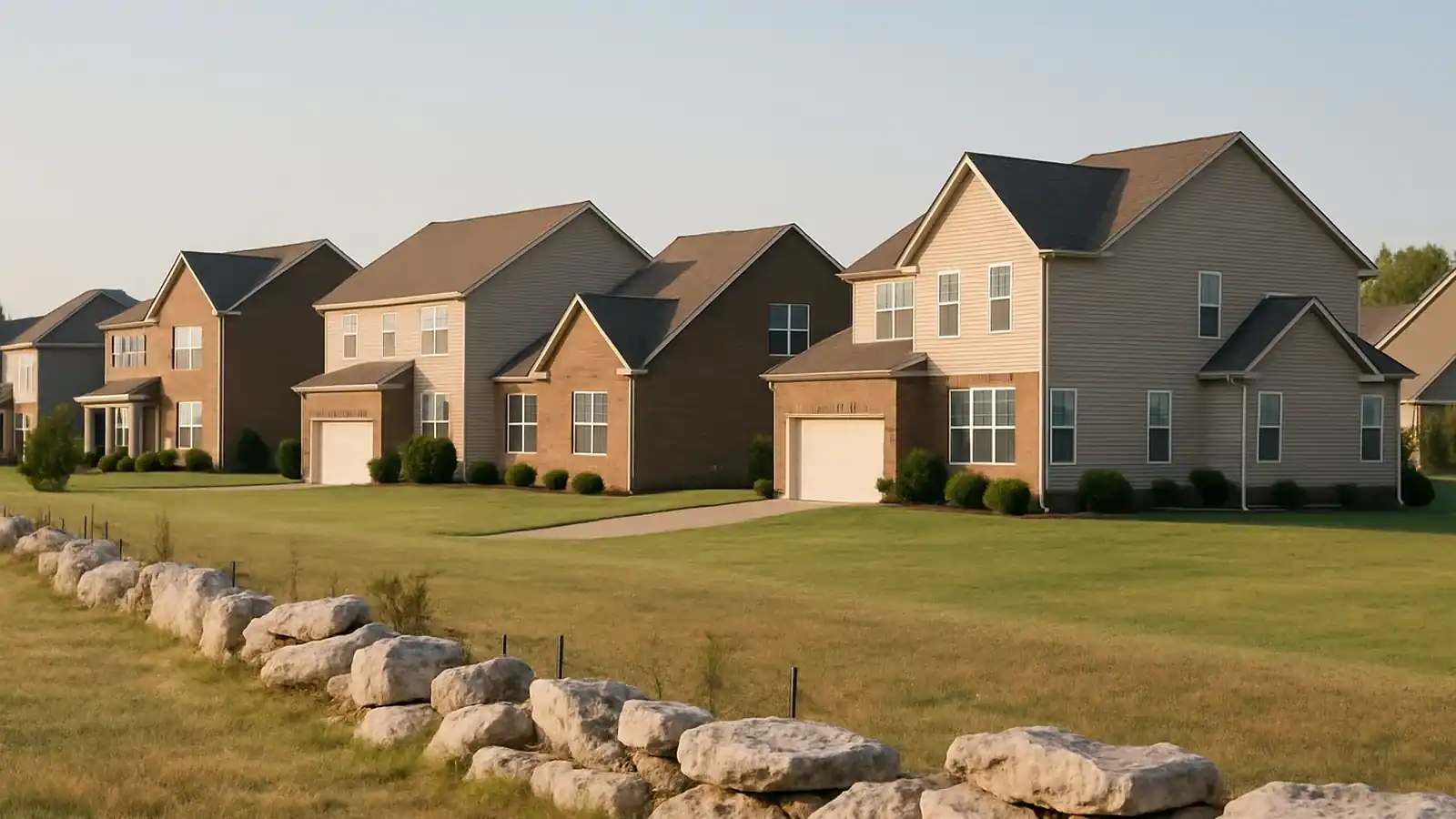
Rockvale owners typically pay $4,000–$15,000 for structural foundation repair, and a lone crack injection can start near $400. Most homes here sit on pads graded out of former farmland, so fill depth and the clay and rock beneath it vary from lot to lot; measure before anyone prices.
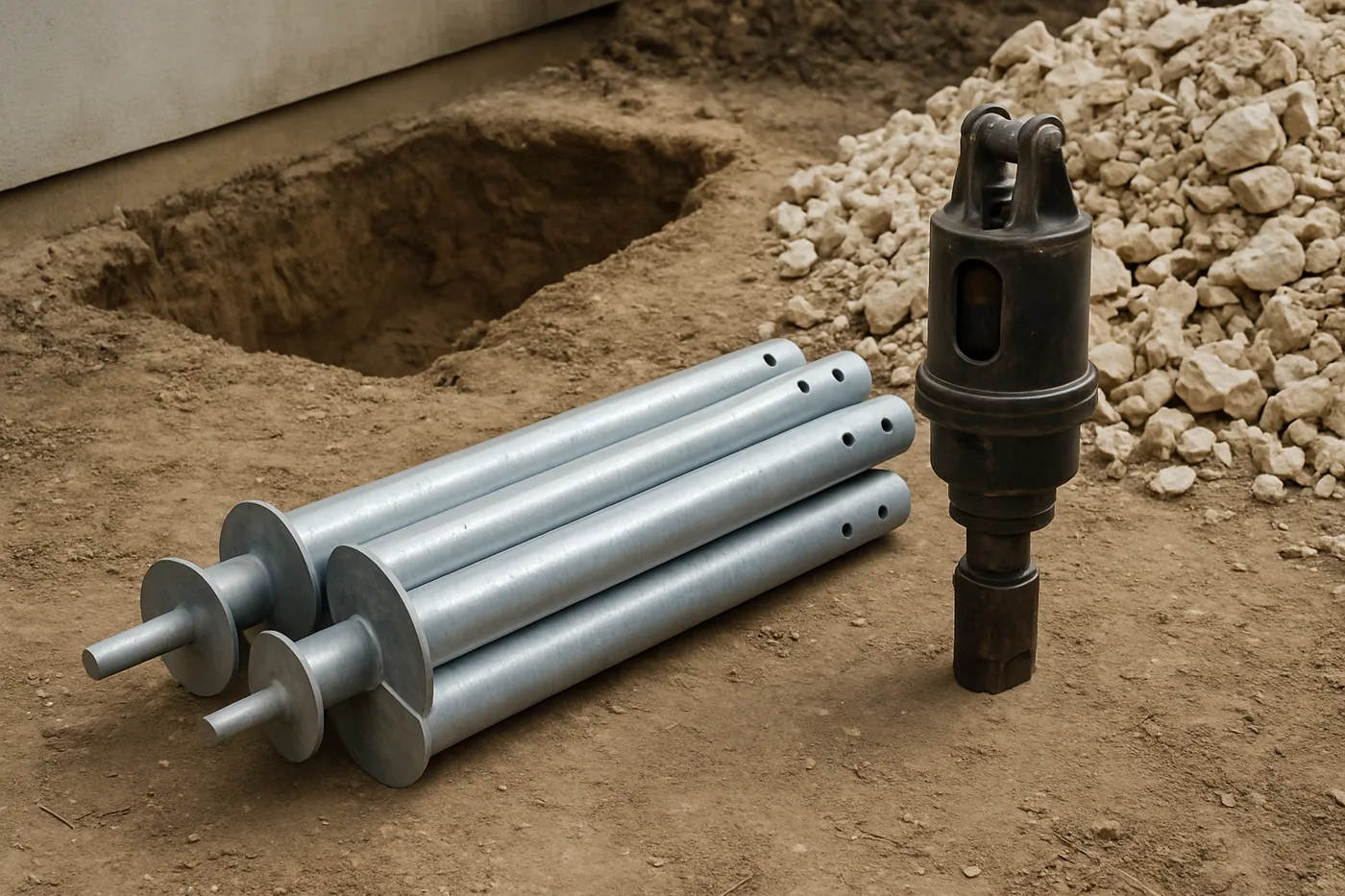
Farmland becoming subdivisions
Rockvale's recent growth converted agricultural land into residential development, and that transition carries a specific foundation implication. Farmland is graded for drainage and cultivation, not for building pads, so converting it involves substantial earthwork, and new homes frequently sit on placed fill of varying depth over the native Central Basin profile.
The practical consequence is the same fill-versus-clay question that runs through the county's growth areas, with one addition: former agricultural land sometimes carries legacy drainage infrastructure (old field tiles, filled ditches, farm ponds) that development didn't fully remove. Those features can concentrate subsurface water in places no one expects, and they show up in evaluations as moisture patterns that don't match the visible grading.
Building new? The cheapest foundation work is preventive
For homeowners in newly built Rockvale neighborhoods, the highest-value action is inexpensive: get the downspout extensions right, confirm the grading actually falls away from the house, and keep beds from trapping moisture at the wall. On clay, steady moisture is the whole game, and establishing good habits in year one costs a few hundred dollars against what correction costs at year twelve.
Asked in Rockvale
Our neighborhood was farmland five years ago. Does that matter?
It does. Converting agricultural land to building pads involves substantial earthwork, so most homes here sit on placed fill of varying depth. Old field tiles, filled ditches, and former ponds sometimes survive underground too, concentrating water in places the visible grading doesn't explain, so a good evaluation looks for those.
My house is brand new. What should I be doing now?
Cheap preventive work with outsized returns: get downspout extensions carrying water six feet or more from the wall, confirm the grading actually falls away from the house, and keep mulch beds from trapping moisture against the foundation. On clay, steady moisture is the whole game.
Is a builder-graded lot a problem?
Not inherently: proper grading and compaction are standard practice. The issue is simply that fill and native clay settle on different schedules regardless of how well the fill was placed. That's soil mechanics, not workmanship, and it's why newer neighborhoods here see movement around the ten-year mark.
Should I get an evaluation before anything cracks?
If you want a baseline, yes: a laser survey documents your floor elevations now, which makes any future change measurable rather than debatable. Many local specialists don't charge for it, and for new construction it frequently produces nothing but reassurance. An honest evaluation won't invent a problem to justify the visit.
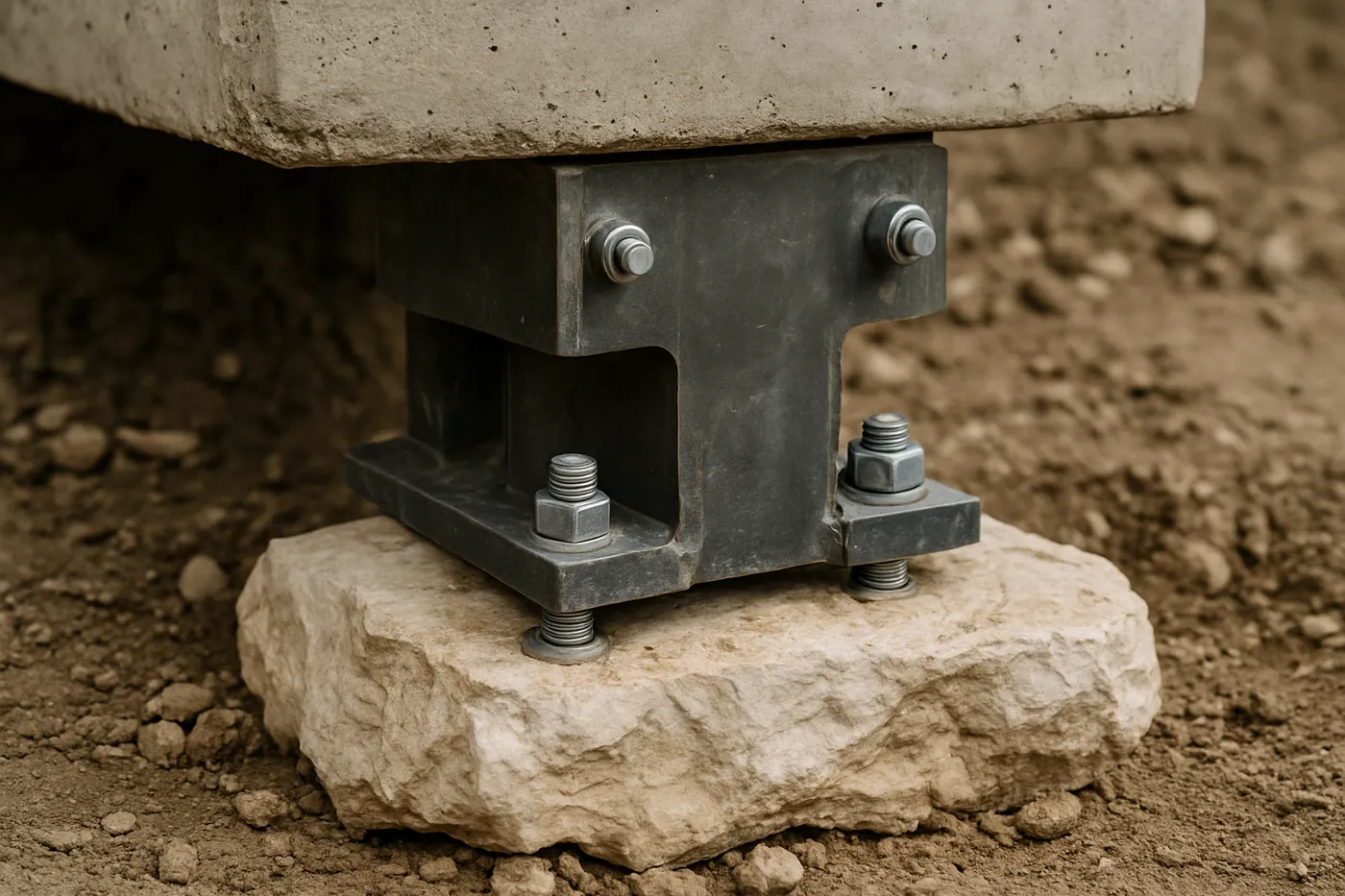
One of the county's youngest housing stocks
The Rockvale census-designated place had about 620 homes in the 2020-2024 American Community Survey, and its median home was built in 2006. Roughly 85% were built in 2000 or later, almost 59% in the 2000s alone, and nearly every one (about 99%) is owner-occupied. That makes Rockvale a place where first-decade fill settlement, not old-house wear, is the usual question.
Four limestones within a short drive
Five sample points about two kilometers apart around Rockvale fall on four different units in the USGS state geologic map: the Lebanon, Carters and Ridley limestones of the Stones River Group, and the Bigby-Cannon Limestone and Hermitage Formation to the south. Armstrong Creek, Overall Creek and the West Fork Stones River all have USGS measurement sites in the area. Rutherford County holds a state MS4 stormwater permit and offers a county map for checking whether a parcel is in a flood zone.
Building codes outside city limits
Rockvale has no city government, so building permits and inspections run through Rutherford County Building Codes in Murfreesboro. Its page lists building permits, inspections, property maintenance and zoning among its duties. Ask that office whether foundation work on your house needs a permit.
Mark and date the crack, then request the evaluation. Line costs are in the cost guide, and service areas lists the other communities.
Get a Murfreesboro foundation evaluation
Tell us what the house is doing (stair-step cracks, doors that stick every August, sloping floors, separating trim) and we’ll pass your request on for an evaluation. A specialist who serves the Murfreesboro area will call you back.