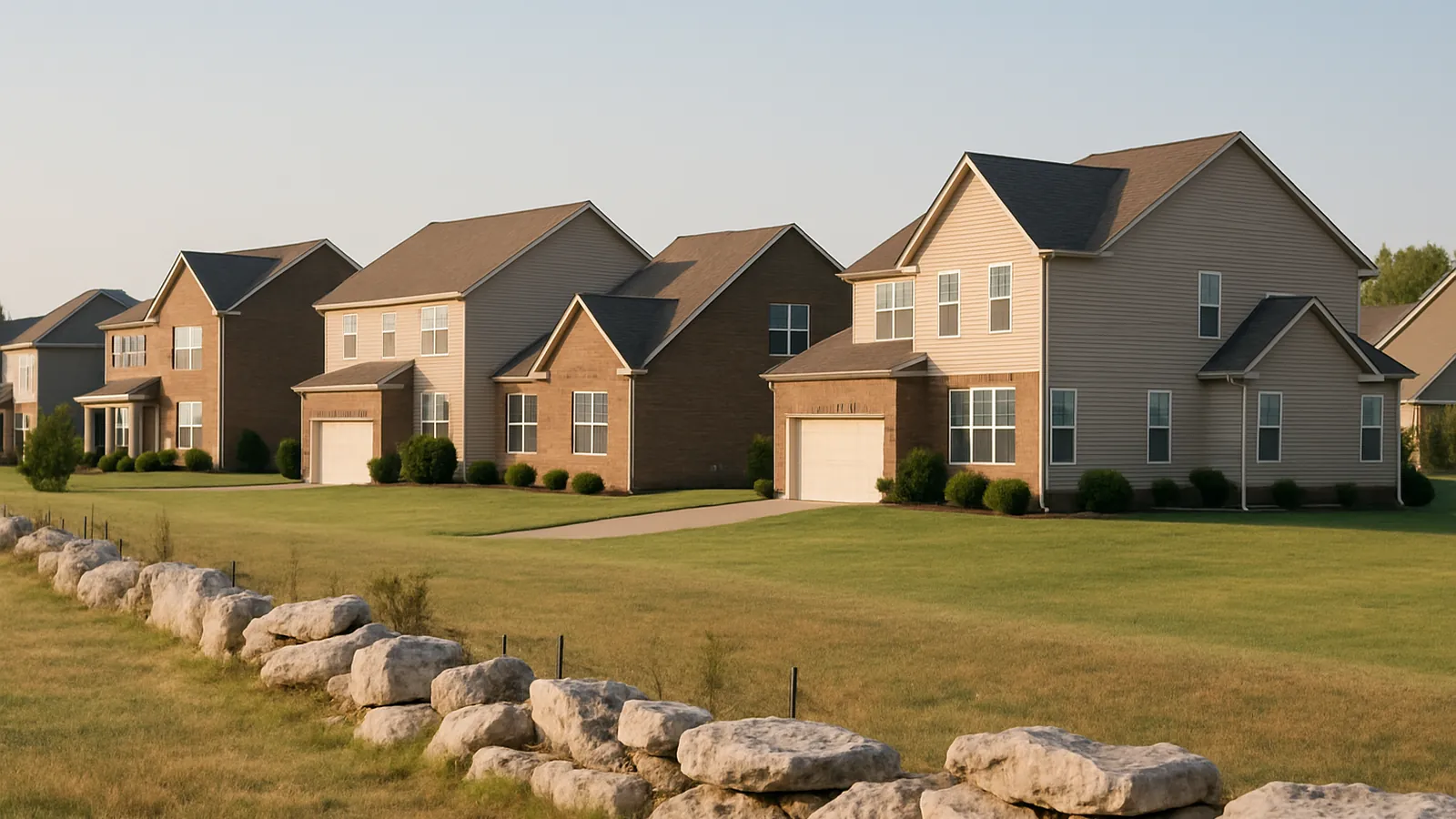
Lebanon homeowners pay $4,000–$15,000 for most structural foundation repairs, from about $400 for a single crack injection. Residual clay cycling over an uneven rock surface produces uneven bearing — exactly what a measured evaluation is built to find.
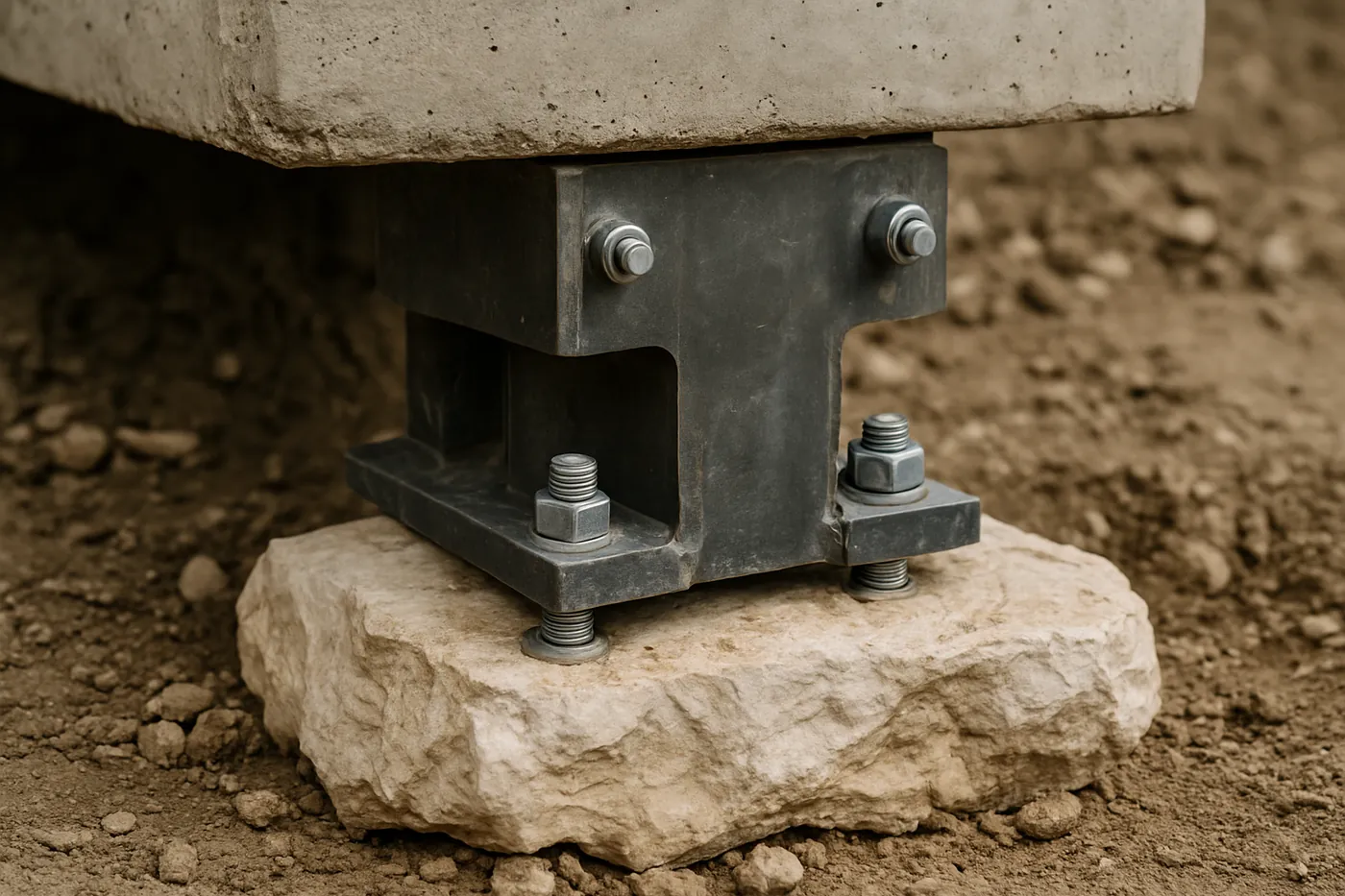
Cedar glades and shallow limestone
Wilson County is known for its cedar glades — areas where limestone bedrock sits at or very near the surface, supporting a distinctive ecology and creating equally distinctive building conditions. Where a house sits on or near glade ground, soil depth can be measured in inches rather than feet, and foundations bear effectively on rock with minimal seasonal movement.
Between glade areas, though, soil accumulates in pockets and depressions to real depth. That juxtaposition — near-surface rock in one spot, several feet of clay a short distance away — produces exactly the differential bearing conditions that crack foundations. Lebanon evaluations pay particular attention to how bearing depth changes across the footprint, because in this county it can change dramatically inside a single house.
Growth pressure and graded lots
Lebanon's rapid expansion along the I-40 corridor brought subdivision development, and with it the familiar cut-and-fill question. On glade-adjacent ground, making a level building pad sometimes means substantial fill on the low side against near-surface rock on the high side — the most extreme version of the differential bearing problem this region produces. Those lots deserve careful measurement before anyone quotes a pier count.
Asked in Lebanon
What's a cedar glade and why does it matter for my foundation?
Glades are areas where limestone sits at or very near the surface — a distinctive Wilson County feature. Building on or near one means soil depth measured in inches, with foundations bearing effectively on rock and moving very little. It's genuinely good ground, when your whole house sits on it.
Our house seems to sit on both rock and deep soil. Is that the problem?
It very likely is. Near-surface rock under one part of the house and several feet of clay under another produces exactly the differential bearing that cracks foundations — and Wilson County generates that condition more than most places. The floor survey maps it, and pier depths follow it.
Does Lebanon's growth mean lots of fill?
In the newer corridors, yes. Making level pads on glade-adjacent ground sometimes means substantial fill on the low side against near-surface rock on the high side — the most extreme version of differential bearing this region produces. Those lots need careful measurement before any pier count is quoted.
Are Wilson County repair costs different?
Usually comparable, occasionally lower where rock is shallow enough that piers reach refusal quickly. Where fill is deep on one side, that portion costs more. Our per-pier refusal logging means you pay for the depth your lot actually required rather than a county-wide average.
Next step for your Lebanon house
Mark and date the crack, then get the baseline — knowing is cheap. The free evaluation takes about an hour and leaves a written report with floor elevations. Costs are itemized in the cost guide; nearby communities are under service areas.
Get a free Murfreesboro foundation evaluation
Tell us what the house is doing — stair-step cracks, doors that stick every August, sloping floors, separating trim — and we’ll schedule an evaluation with photos and measurements. We reply the same business day.